
About this guide
This guide explains the legal duties UK employers and food business operators carry regarding rodent control, what signs of rodent activity to look for in commercial premises, and how professional commercial rodent control works. It covers obligations under food hygiene law, the Health and Safety at Work etc. Act 1974, and CRRU stewardship requirements including the 2026 qualification update. The page supports Apex Pest Control Ltd's commercial pest control information by answering common questions before businesses choose a professional service.
Why Commercial Premises Attract Rats and Mice
Rodents — primarily brown rats (Rattus norvegicus) and house mice (Mus musculus) — actively seek the food, water, and shelter that most commercial premises provide. Warehouses, food processing units, catering kitchens, care homes, schools, and retail premises all present environments that support sustained rodent activity. Urban commercial buildings along drainage infrastructure corridors in Leeds, Sheffield, Barnsley and Rotherham are under consistent pressure from sewer rat populations.
How Rats and Mice Gain Entry to Commercial Buildings
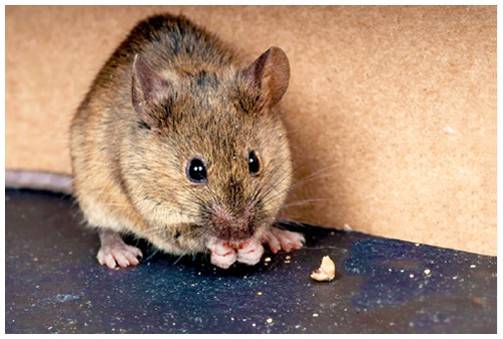
Brown rats enter via drainage defects, gaps around utility penetrations, and poorly sealed loading bay doors. House mice gain entry through gaps as small as 6 mm — a pencil-width — around conduit runs, ventilation shafts, and suspended ceiling voids. Once inside, both species follow fixed run routes along wall junctions, behind racking, and within service voids. This means contamination risks spread across large areas of a building from a small initial entry point — a critical distinction from domestic infestations, where the scale of the building limits the area at risk.
Rodent infestations in commercial and industrial premises must be reported under the Food Safety Act 1990 if they affect a food business. Failure to manage an active infestation that is identified during a routine inspection can result in enforcement notices, improvement notices, or immediate closure orders from the local authority Environmental Health team.
Commercial Environments That Carry the Highest Risk
Food processing and catering facilities present the highest risk due to the combination of year-round food availability, warmth, and connected drainage infrastructure. Care homes carry regulatory risk under CQC requirements in addition to food safety obligations. Warehousing facilities with large footprints and irregular inspection of racking voids may miss early infestations until they become significant. Any commercial premises connected to or built over Victorian-era drainage infrastructure should treat rodent risk as an ongoing management priority, not an occasional reactive concern.
Your Legal Duties as an Employer and Food Business Operator
UK employers and food business operators carry specific legal obligations relating to rodent control. Ignorance of these obligations is not a defence — and enforcement can include immediate business closure.
Food Hygiene Law
Under the Food Safety and Hygiene (England) Regulations 2013 and Regulation (EC) 852/2004 (retained in UK law), food business operators must implement and maintain an effective pest management programme. Rodent evidence at an EHO inspection constitutes a Category A critical control point failure. Environmental Health Officers can issue prohibition notices closing premises immediately — and the cost of closure, product loss, and reputational damage vastly exceeds the cost of a professional rodent management contract.
Health and Safety Law
The Health and Safety at Work etc. Act 1974 requires employers to ensure, so far as reasonably practicable, that workplaces are safe and without health risks. A known rodent infestation presenting disease transmission risk to employees — through contaminated surfaces, food, or aerosolised excreta — constitutes a breach of this duty. The Prevention of Damage by Pests Act 1949 gives local authorities powers to require occupiers to take steps to destroy or prevent the spread of rats and mice; South Yorkshire and West Yorkshire councils actively enforce these provisions.
Care Sector Obligations
CQC Regulation 12 (Safe Care and Treatment) requires registered care providers to ensure premises are free of vermin. Rodent activity in a care home constitutes a reportable infection control concern and may trigger a CQC inspection. The vulnerability of residents to zoonotic pathogens carried by rodents — particularly immunocompromised or elderly individuals — makes fast, effective rodent management a patient safety matter, not just a hygiene compliance issue.
Signs of Rodent Activity in Commercial Properties
Early detection is critical in commercial settings. Infestations spread rapidly through connected building systems — service voids, suspended ceilings, and roof spaces allow rapid movement between areas. Regular, structured inspection of these areas is an essential part of any commercial rodent management programme.
Rat Signs
- Fresh droppings — 15–20 mm, dark, spindle-shaped — in food storage areas, behind equipment, or along wall junctions
- Smear marks along skirting boards and pipework where rats follow fixed run routes
- Gnaw damage to packaging, structural timbers, cables, and door frames
- Burrowing activity near loading bays, perimeter drainage, or along the building foundation
Mouse Signs
- Small droppings — 3–6 mm, tapered — scattered widely across surface areas in food storage or food preparation zones
- Gnaw holes in packaging and acoustic ceiling tiles
- Runways through insulation in roof voids
- Squeaking or scratching sounds in ceiling voids, particularly at night
Both species leave an ammonia-like urine odour in enclosed store rooms or subfloor voids, damaged packaging in storage areas, and may be sighted by staff — particularly during early morning or evening hours when disturbance is low. Any staff sighting during business hours indicates an established infestation with significant population pressure.
Professional Rodent Control for Commercial Properties
Commercial rodent control requires a fundamentally different approach to domestic treatment. The interconnected nature of commercial buildings — service voids, drainage, cavity walls — means entry point identification and structural proofing is as important as the baiting programme. Under the CRRU UK Stewardship Programme, all professional rodenticide use requires a risk assessment, management plan, and monitoring records.
Over 73% of tested UK brown rat populations carry VKORC1 resistance mutations — selecting the correct rodenticide active ingredient requires professional assessment and local resistance profile data.
— Buckle and Prescott, RRAG, 2020
What a Professional Commercial Treatment Programme Includes
A properly structured commercial rodent programme includes a full site survey to identify entry points, harbourage areas, and run routes; species confirmation and infestation severity assessment; installation of tamper-resistant bait stations in positions inaccessible to non-target species and staff; drain inspection to identify sewer rat entry where relevant; and a treatment programme with full visit records — compliant with due-diligence requirements for food businesses and care providers.
CRRU Stewardship and the 2026 SGAR Qualification Requirement
Second-generation anticoagulant rodenticides (SGARs — brodifacoum, difenacoum, bromadiolone, difethialone) are subject to CRRU stewardship requirements because of secondary poisoning risk to non-target wildlife. From January 2026, CRRU requires a minimum Level 2 qualification — RSPH Level 2 Award in Pest Management or equivalent — for all outdoor SGAR use. All technicians must hold this qualification to treat commercial premises where bait stations are placed externally. Treatment records, bait station maps, and survey reports form part of the due-diligence documentation that EHO inspections may require.
Integrated Pest Management — Reducing Commercial Rodent Risk Long-Term
Integrated Pest Management (IPM) is the professional framework for delivering long-term rodent risk reduction in commercial settings. IPM combines physical measures, monitoring, habitat modification, and targeted chemical use — with chemical treatment deployed as part of a managed programme rather than a reactive single-event response.
What an IPM Programme Delivers
For commercial clients, a structured IPM programme typically includes proofing audits with specified defect remediation to prevent re-entry; staff training on rodent recognition and reporting; scheduled monitoring visits at frequencies matched to the premises risk profile (typically monthly for high-risk food businesses, quarterly for lower-risk warehousing or retail); electronic monitoring devices providing real-time activity data; and full treatment documentation satisfying EHO due-diligence requirements.
Electronic monitoring — wireless sensors placed in bait stations and at high-risk detection points — provides 24-hour coverage data without requiring physical inspection of every station. For larger premises, this reduces the risk of activity going undetected between scheduled technician visits and allows faster response to emerging pressure points.
For information on specific commercial pest management contracts and what to expect from a professional service, see the Apex Pest Control commercial pest control page. You may also find our guide to pest control requirements for businesses useful for understanding your obligations across different pest types.
Frequently Asked Questions
Are businesses legally required to control rats and mice?
Yes. Food businesses must implement pest control under the Food Safety and Hygiene (England) Regulations 2013 and retained Regulation (EC) 852/2004. Employers also have a duty under the Health and Safety at Work etc. Act 1974 to protect employees from health risks. Local authorities can serve notice requiring occupiers to control rats under the Prevention of Damage by Pests Act 1949.
What happens if an EHO finds rodent evidence during an inspection?
Rodent evidence at an EHO food hygiene inspection is a Category A critical control point failure. The EHO may issue an improvement notice requiring immediate remedial action, a prohibition notice closing part or all of the premises, or in serious or repeat cases, prosecution. Food hygiene ratings may be reduced to zero.
How often should a commercial premises have pest control visits?
This depends on premises type and risk profile. High-risk food businesses typically require monthly visits minimum. Warehousing and light manufacturing may be served by quarterly visits with electronic monitoring in between. A BPCA-qualified technician will recommend the appropriate service frequency after a site survey.
Do rodent control records need to be kept for EHO inspections?
Yes. Food businesses should maintain pest control treatment records, survey reports, and bait station maps as part of their food safety management system. These records demonstrate due diligence in the event of an EHO inspection or a food safety incident involving rodent contamination.
Can mice get into upper-floor commercial premises?
Yes. House mice are excellent climbers and will use conduit runs, pipe chases, service ducts, and cavity walls to move vertically through a building. Upper-floor infestations commonly originate from ground-level entry points and spread upward through building services. A full-building survey is necessary to trace the source.
Does the 2026 CRRU rodenticide change affect how my premises will be treated?
Yes. From January 2026, CRRU requires all pest control technicians carrying out outdoor SGAR (second-generation anticoagulant rodenticide) use to hold a minimum RSPH Level 2 Award in Pest Management or equivalent qualification. This applies to external bait station programmes around commercial premises.
When booking a commercial rodent service, confirm that technicians hold this qualification. CRRU-compliant treatment also requires written risk assessments, treatment records, and bait station maps — documentation that food businesses need for EHO due-diligence requirements.
What documentation should a commercial pest controller provide after each visit?
A professional commercial rodent service should provide a site survey report, bait station location map, treatment records for each visit (products used, application points, consumption data), any proofing recommendations identified, and a follow-up schedule. For food businesses, these records form part of your food safety management system and must be available for EHO inspection. Under CRRU stewardship requirements, treatment records must also include the technician's qualification evidence and risk assessment for rodenticide use.
Commercial Rodent Control Across Yorkshire
If your business has a rodent problem, Apex Pest Control Ltd provides commercial rodent management contracts across Sheffield, Leeds, Barnsley, and Rotherham. We work with food businesses, care homes, warehouses, and retail premises — providing BPCA-qualified technicians, tamper-resistant station programmes, and full treatment documentation.
Contact Apex Pest Control Ltd to discuss a commercial pest contract.