
About this guide
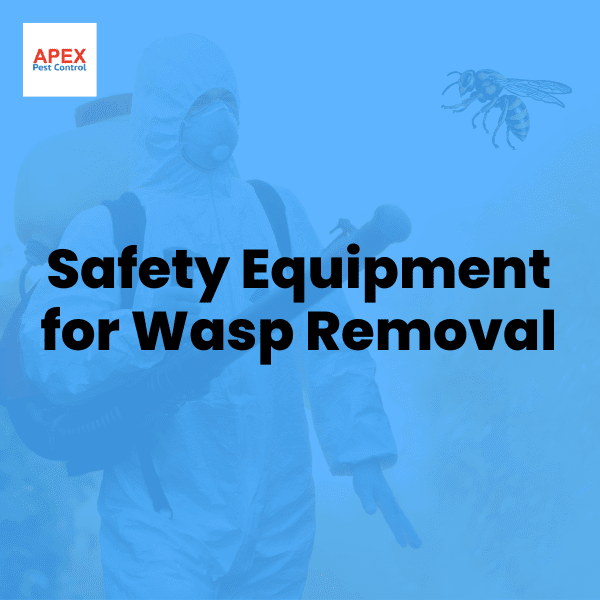
Approaching an active wasp nest — particularly a large midsummer or late-summer nest — requires appropriate protective equipment. Standard clothing does not provide adequate protection against mass stinging events; a professional pest controller treating a large loft nest may disturb hundreds of workers simultaneously. This guide covers the safety equipment used for professional wasp nest removal, explains why the PPE level reflects genuine risk, and identifies the situations where DIY treatment without professional equipment crosses from manageable to unsafe.
The Risk of Wasp Nest Treatment Without Adequate PPE
A large wasp nest at peak season (July–August) contains thousands of workers. The colony's defence response to a perceived nest threat is rapid and involves large numbers of workers simultaneously — triggered by alarm pheromone released by the first stinging or disturbed individuals. A person treating a large loft nest in ordinary clothing who triggers a mass defence response can sustain dozens or hundreds of stings in the enclosed loft space before being able to retreat. Multiple stings from a large colony present a genuine medical risk even to people without known wasp venom allergy — high venom dose from mass stinging is toxic and can cause systemic reactions including vomiting, headache and cardiovascular effects at sufficient dose.
For people with a known or suspected anaphylactic response to wasp venom — a history of systemic reaction to a previous sting — any approach to an active nest without professional assistance carries potentially life-threatening risk. Anaphylaxis requires immediate treatment with adrenaline (epinephrine); a person alone in a loft space treating a wasp nest who develops anaphylaxis is in an extremely vulnerable position. This is the most important safety consideration for any DIY wasp nest treatment.
The Professional Wasp Suit
The primary protective item for wasp nest treatment is a full bee/wasp suit — a one-piece coverall manufactured from tightly woven fabric (typically polyester or nylon ripstop), with a fully attached or zip-on veil that covers the face and head completely. Key features of an effective wasp suit:
The suit must be fully sealed at all entry points — wrists, ankles and the neck-veil junction. Any gap is a potential entry route for a wasp that lands on the suit — a single wasp inside a suit can cause multiple stings. Cuffs should be elasticated or velcro-sealed; trouser ankles should tuck into boots with the suit secured over the top. The veil must have a clear viewing panel that does not restrict peripheral vision and must be securely sealed to the suit collar. Quality professional bee/wasp suits have double zips, sealed zip guards and elasticated face openings. The viewing panel must be fine enough in mesh aperture that wasps cannot sting through it — a veil with coarse mesh provides inadequate face protection.
Gloves
Standard disposable nitrile gloves provide inadequate protection against wasp stings — the sting penetrates thin nitrile readily. Professional wasp removal gloves are typically thick leather (gauntlet-style, extending to the mid-forearm) worn over a thinner inner glove. The leather thickness prevents the stinger from reaching the skin even under direct contact. Nitrile over-gloves can be used over leather gloves when the work also involves insecticide handling and requires chemical-resistant hand protection. Gloves must overlap the suit sleeve adequately — any gap between glove and cuff is a sting risk.
A professional bee/wasp suit provides physical protection against individual stings, but its most important function is sealing every potential entry point against a wasp that lands on the suit exterior — a single wasp that finds an unsecured gap at the wrist or neck can cause multiple stings before it can be removed inside the confined space of a loft or cavity.
— Pest management occupational health guidance
Footwear and Lower Body Protection
Boots or wellingtons that the suit trouser leg can be tucked into and secured are the standard lower body protection. The transition between suit ankle and boot is a common gap — elastic or velcro strap securing at the ankle ensures this is sealed. Standard trainers or shoes are inadequate as the laces and tongue area provide entry routes for wasps at ground level. Steel-toecap boots are the professional standard for loft work where roof timbers and components may be disturbed.
Working at Height — Combined Risk
Many wasp nest treatment situations involve working at height: in a loft (access via a hatch, working in low headroom), on a ladder to reach a nest in a fascia or under eaves, or on a scaffold or access platform to reach an elevated nest. The Working at Height Regulations 2005 apply to any work where a person could fall a distance liable to cause personal injury. The combination of wasp exposure risk and working at height risk requires risk assessment before treatment begins: a professional pest controller assesses both the wasp risk (nest size, colony activity, confined space) and the height risk (access route, working surface, emergency egress) together. A person treating a large loft nest via a loft hatch who triggers a mass sting response and attempts to retreat rapidly down a loft ladder is at risk of both stings and a fall.
Confined Space Considerations
Loft spaces are technically confined or semi-confined working environments — low headroom, limited access and egress points, and potentially compromised air quality (dust, insulation fibres, in some cases a history of pest activity including rodent droppings, guano or other biological contamination). A professional pest controller entering a loft to treat a wasp nest will assess the loft access route, ensure a clear egress path, check that they are not working alone in a situation where an emergency response would be slow, and ensure they have appropriate equipment for the loft environment in addition to wasp PPE.
When to Choose Professional Over DIY — DIY wasp nest treatment with consumer products is manageable for an accessible, small, ground-level nest that can be treated from distance (applying powder to an entrance hole while standing 2 metres away at dusk, retreating immediately). Professional treatment is the right choice for: any loft nest (confined space + large colony); any cavity wall nest (access equipment required); any nest where the full extent of the colony is not visible; late-season nests (July–September) in any partially accessible location where the colony is at maximum size; any situation where the treating person has a personal history of systemic reaction to wasp stings; and any elevated treatment requiring ladder or working-at-height access.
Insecticide Application Equipment
Professional wasp technicians use purpose-designed application equipment appropriate to the nest location: bellows-type hand dusters for applying insecticide powder to nest entrances and into cavities; compressed-air sprayers for liquid insecticide application to accessible nests; pole extension lances for reaching elevated nests from distance; and — for underground and cavity nests — flexible extension tubes that direct dust through the nest entrance. This equipment allows the technician to treat the nest from a maintained safe distance, reducing the intensity of wasp contact during the treatment process. Consumer aerosol wasp sprays are formulated for spot treatment at close range — they are effective for small accessible nests but do not distribute through a large enclosed nest structure as well as a professional dust application.
After Treatment — When Is It Safe to Re-enter?
After professional wasp nest treatment, the treated area (loft, outbuilding, cavity entry zone) should not be re-entered without PPE for at least 24 hours. Workers returning to the nest during this period are still alive and defensive. By 24–48 hours after treatment, the colony should be eliminated and worker activity ceased. A professional technician returning for a follow-up check — confirming no activity at the entry point and silence in the treated void — verifies the colony is dead before the area is released for normal access without protective equipment.
Frequently Asked Questions
Do I need a bee suit to remove a wasp nest?
For a small, accessible nest at ground level that can be treated from distance — applying powder to an entrance hole while standing 2 metres away at dusk and retreating immediately — a full bee suit is not strictly necessary, though light protective clothing covering all exposed skin is advisable. For any nest in a loft space, cavity wall, outbuilding, or any nest where you need to approach within 1–2 metres of the colony, a full bee/wasp suit with sealed wrists, ankles and fully attached veil is the appropriate minimum protection. The larger the nest and the later in the season, the more critical full suit protection becomes.
What protective clothing should I wear to treat a wasp nest?
Minimum protective clothing for DIY treatment of a small accessible nest: long-sleeved shirt tucked into thick trousers, tucked into boots (no exposed skin at ankle); rubber gloves over long sleeves (sealed at wrist); hat and face protection. Full protective equipment for professional or larger nest treatment: one-piece bee/wasp suit with integrated veil (sealed at all entry points — wrists, ankles, neck); thick leather gauntlet gloves extending to mid-forearm; boots that the suit trouser leg secures over. At no point should you approach an active nest with exposed skin — any gap in clothing is a potential sting point.
What should I do if stung many times during wasp nest removal?
If stung multiple times (more than 10 stings), leave the area immediately without swatting at wasps. Move at least 30 metres from the nest before stopping. Remove any wasp still on clothing by brushing (not squeezing — squeezing releases alarm pheromone).
Apply cold compress to sting sites. If you experience any symptoms of anaphylaxis — difficulty breathing, throat swelling, rapid heartbeat, dizziness, nausea, sudden rash away from the sting sites — call 999 immediately and use an adrenaline auto-injector if available and prescribed. A high-dose sting event (many stings) can cause systemic toxic effects even without anaphylaxis — seek medical advice if symptoms are not resolving within a few hours.
Can wasps sting through a bee suit?
A high-quality, properly fitted bee/wasp suit made from tightly woven fabric provides adequate protection against wasp stings through the fabric — the suit material thickness prevents the stinger from reaching the skin. However, any gap in the suit (an unsecured wrist cuff, a loose ankle seal, a zip not fully closed) is a potential entry route where a wasp can get inside the suit and sting from inside. The risk from a single wasp inside the suit is significant in a confined treatment space.
The integrity of the seals at all entry points is more important than the overall fabric thickness — a poorly sealed expensive suit is less protective than a correctly sealed budget suit.
Is it safe to treat a wasp nest alone?
For small, accessible ground-level nests treated from distance, treating alone is manageable. For any loft nest, large colony, or situation involving confined space or working at height, having a second person present (outside the risk area, able to call for help) is strongly recommended. The primary risk of solo work is a mass sting event while working in a confined space — in a loft, a person who triggers a colony defence response and begins to experience anaphylaxis while alone is in a seriously vulnerable position.
Professional pest controllers treat significant nests in pairs for exactly this reason. If you have any history of systemic reaction to wasp stings, do not attempt to treat any active nest alone.
What are the working at height risks for wasp nest removal?
Working at height for wasp nest treatment combines two risk factors: the physical risk of falling from a ladder, scaffold or through loft timbers; and the psychological and physical distraction of wasp activity during the height work. A person on a ladder treating a nest under an eaves line who is stung and reacts by jerking away or losing concentration is at risk of a fall. A person in a loft who retreats rapidly from a nest defence response in low headroom and poor footing is at risk of a fall through the ceiling or off a joist.
These risks are real and are why professional pest controllers assess height access as part of their risk assessment before treating elevated or loft nests.
Can I use normal gardening gloves for wasp protection?
No. Standard gardening gloves — thin cotton or light leather — do not provide adequate protection against wasp stings. A wasp sting penetrates thin glove material readily.
Adequate protection requires thick leather gauntlet-style gloves that the stinger physically cannot penetrate. Welder's or heavy-duty leather gauntlets provide the best hand and wrist protection. If thick gauntlet gloves are not available, multiple layers of rubber household gloves over a latex inner glove provide reasonable protection for a brief, low-exposure treatment of a small nest, but thick leather gloves are the professional standard for any significant nest treatment.
Safe Professional Wasp Nest Removal in South Yorkshire
Apex Pest Control Ltd removes wasp nests safely across Sheffield, Leeds, Barnsley and Rotherham — full protective equipment, professional insecticide, and the experience to approach even large late-season colonies without personal risk. Contact us for prompt wasp nest treatment.
Contact Apex Pest Control Ltd for wasp nest removal.