

About this guide
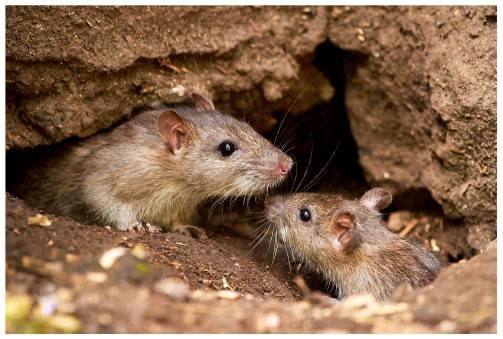
This guide explains why brown rats (Rattus norvegicus) cause structural damage to UK homes, what that damage looks like, and the public health risks they carry — including Seoul virus and leptospirosis. It covers anticoagulant resistance, your legal duty under the Prevention of Damage by Pests Act 1949, and what professional rat control involves. The page supports Apex Pest Control Ltd's rat control information by answering common questions before users choose a professional pest control service.
Why Brown Rats Move Into UK Homes
Brown rats (Rattus norvegicus) do not enter homes by accident. Every infestation begins with a specific trigger — food, water, warmth, or shelter. The species is colonial, opportunistic, and highly adaptable to urban environments. Rats are attracted by accessible food waste (unsecured bins, compost heaps, fallen fruit), water sources (leaking pipes, standing water in gardens), and entry points into warm voids: cavity walls, subfloor spaces, and roof voids accessible from garden level.
The UK brown rat population is estimated at approximately 10.5 million — populations peak in late summer and autumn as juveniles from summer litters mature.
— Wildlife Online / Mammal Society
Brown rats require approximately 60 ml of fresh water per day. This makes proximity to drainage infrastructure a defining feature of UK rat pressure on domestic properties. In South Yorkshire and West Yorkshire, older urban sewer systems create persistent pressure on surrounding properties — sewer-dwelling populations follow pipe networks and exploit any structural defect to find entry points above ground.
What Makes a Property Attractive to Rats
A rat assesses a potential harbourage for warmth, shelter, low disturbance, and consistent food access. Roof voids, cavity walls, the void beneath garden sheds, and subfloor spaces in older suspended-floor properties all meet these criteria. Properties close to watercourses, older drainage infrastructure, or where food waste is stored without rodent-proof containers are at consistently higher risk. Removing accessible food and water — and maintaining drains and pipework in good condition — is the most effective preventative action a householder can take.
How Rats Enter Properties — Entry Points and Warning Signs
A brown rat can squeeze through any gap of approximately 25 mm or larger. Identifying and proofing these entry points is the only way to prevent re-infestation after a treatment programme. Entry route identification is therefore as important as the baiting programme itself.
Drain and Sewer Entry
Drain defects are the most significant and frequently underestimated domestic entry route. Broken clay pipe joints, poorly seated inspection chamber covers, gaps around pipe penetrations through floor slabs, and deteriorated drain access covers all allow sewer populations to move directly into sub-floor voids and from there into the property. A professional rat survey should include a drain inspection where sewer entry is suspected — surface treatment alone will not stop an active drain source producing new individuals.
Structural Entry Points
Above ground, common entry routes include gaps around incoming utility cables and water pipes, air bricks without rodent-proof mesh, gaps beneath poorly fitted external doors, and structural gaps at ground level in older properties. Brown rats actively gnaw at gap edges to enlarge them — a gap slightly below 25 mm will not stay small for long where a rat is motivated to enter.
Warning signs of active rat activity: dark, greasy smear marks along skirting boards and wall junctions (rats run the same routes repeatedly, depositing body oils); dark, spindle-shaped droppings up to 20 mm long near food sources, in roof voids, or along run routes; gnaw marks on timber, cable, and pipework; a strong ammonia-like urine odour in enclosed spaces; and scratching or scurrying sounds within walls or under floors at night.
The Structural Damage Rats Cause to Properties
Rats gnaw continuously because their incisor teeth grow throughout their lives — they must wear them down to maintain functional length. Brown rat incisors exert sufficient bite force to work through mild steel, aluminium, lead pipe, and concrete block. This creates a recognisable pattern of structural damage across UK properties.
Fire risk: Rat gnawing of electrical cable insulation is a recognised cause of domestic fires. Exposed live conductors within wall voids, roof spaces, or beneath floors are difficult to locate and represent a serious ongoing hazard while any active infestation remains. The CIEH and BPCA both cite rodent gnawing as a contributing factor in electrical fire incidents.
The main structural damage types rats cause:
- Electrical cables: Stripped insulation exposes live conductors — the most serious structural risk from a domestic rat infestation.
- Gas and water pipes: Gnawing through plastic and lead supply pipes causes gas leaks and water ingress, both of which are costly and hazardous to locate and repair.
- Roof timbers and joists: Structural timber damage in roof voids reduces load-bearing capacity and may require significant remedial work to repair safely.
- Insulation: Rats shred insulation material for nesting, reducing thermal performance and spreading contamination through the affected void.
- Foundations and paving: Burrowing alongside drainage runs and building footings undermines paths, patios, and structural foundations progressively over time.
Health Risks from Rats in the Home
Brown rats are reservoir hosts for several zoonotic pathogens with direct public health consequences for UK households. The primary transmission routes are contaminated surfaces, food, and water — not necessarily direct contact. A rat infestation in a wall void or subfloor space carries genuine health risk even where no rats are ever seen inside the living area. A single rat deposits approximately 40–50 droppings and up to 14 ml of urine per day as it moves through a building.
Seoul Virus (a Hantavirus) — the UK Strain
Rattus norvegicus is the principal reservoir of Seoul virus, a hantavirus, in the UK. Public Health England confirmed the first UK rat-associated Seoul virus cluster in 2018 (PHE Health Protection Report 12(5), 2018). Transmission occurs through inhalation of aerosolised rat excreta — dried droppings disturbed during cleaning — or through direct contact with an infected rat or its urine. PPE (nitrile gloves, eye protection, and a dust mask) is essential during any clean-up following confirmed rat activity. Professional operatives are trained in safe-disturbance protocols for this reason.
Leptospirosis (Weil's Disease)
The brown rat is the primary UK reservoir for Leptospira interrogans serovar Icopenhageni — the bacterium responsible for leptospirosis. UKHSA data records a mean of 49–58 confirmed cases per year in England and Wales (2015–2023 mean), with a case fatality rate of approximately 5–10%. Transmission occurs through contact with water or soil contaminated by rat urine — a risk in gardens, subfloor voids, and any damp enclosed space with evidence of rat activity.
UKHSA data records a mean of 49–58 confirmed leptospirosis cases per year in England and Wales (2015–2023 mean) — the brown rat is the primary UK reservoir of the causative bacterium, Leptospira interrogans.
— UKHSA Leptospirosis Annual Report, 2023
Salmonella and Other Pathogens
Rats are reservoir hosts for Salmonella spp. and contaminate food and food-contact surfaces through faecal deposits, urine, and body contact as they move. Additional pathogens associated with UK brown rats include rat bite fever (Streptobacillus moniliformis — rare but documented), and toxoplasmosis (Toxoplasma gondii — risk primarily to immunocompromised individuals through contaminated surfaces). Salmonella alone accounts for an estimated 8,000–10,000 UK cases annually across all sources, with rodent contamination a recognised pathway (UKHSA).
Your Legal Duty to Act on Rat Activity
Rat control carries legal obligations for UK property occupiers. The Prevention of Damage by Pests Act 1949 requires occupiers to notify their local authority of significant rat infestations; local councils have statutory powers to require landowners to carry out control works. South Yorkshire and West Yorkshire councils actively enforce these provisions and investigate complaints about rat activity.
For food businesses, the Food Safety Act 1990 and food hygiene regulations make pest control a mandatory component of food safety management — rodent evidence at an Environmental Health inspection constitutes a Category A critical control point failure and grounds for prohibition notice and closure. For domestic occupiers, an uncontrolled infestation that spreads to neighbouring properties creates civil liability. The legal duty to act is not theoretical.
Why Professional Rat Treatment Is Essential
Off-the-shelf rat bait consistently fails in established infestations for a specific, documented reason: anticoagulant resistance. Consumer rat bait uses first-generation anticoagulant rodenticides — the same active ingredient class that resistance has now rendered ineffective in the majority of tested UK rat populations.
VKORC1 resistance mutations are present in 73.7% of 218 tested UK brown rat populations — first-generation anticoagulants, the active ingredients in consumer rat bait, are ineffective in most UK locations.
— Buckle and Prescott, RRAG, 2020
Anticoagulant Resistance — What It Means in Practice
Key VKORC1 resistance mutations in UK brown rat populations include L120Q (highest recorded resistance — found in Wales and the English-Welsh border counties; confers resistance to all anticoagulant classes including second-generation SGARs), Y139C (widespread across southern Scotland, north-west England and parts of the Midlands — warfarin resistant, SGAR efficacy reduced), and Y139F (Scotland and north-west England — similar resistance profile to Y139C). A professional technician checks RRAG resistance mapping for the relevant geographic area, selects the appropriate rodenticide active ingredient, and adjusts the treatment protocol accordingly — a consumer bait product cannot do this.
Rats also exhibit pronounced neophobia — a strong wariness of novel objects placed into their established environment, including new bait stations and traps. This wariness typically takes 4–10 days to dissipate as animals habituate. A householder who sees no bait consumption after a few days and concludes the product is not working is often observing neophobia, not treatment failure. Abandoning the programme at this point is a consistent cause of failed consumer treatment attempts.
CRRU Stewardship and the 2026 SGAR Qualification Requirement
Second-generation anticoagulant rodenticides (SGARs — brodifacoum, difenacoum, bromadiolone, difethialone) are restricted to professional use under the CRRU UK Stewardship Programme because of secondary poisoning risk to barn owls, red kites, buzzards, and other non-target predators. From January 2026, CRRU requires a minimum Level 2 qualification — RSPH Level 2 Award in Pest Management or equivalent — for all outdoor SGAR use. Treatment is capped at 35 days per baiting application, with mandatory monitoring visits and written survey and treatment records.
How Professional Rat Control Works
A professional rat treatment for a domestic property follows a structured sequence — not a single bait-and-return visit.
- Initial survey: Entry points, harbourage areas, and run routes are identified. Drain defects are assessed where sewer entry is suspected. Species confirmation, infestation severity, and resistance profile assessment are all part of this initial visit.
- Bait station installation: Tamper-resistant bait stations are placed at identified harbourage points and run routes — positioned to be inaccessible to children, pets, and non-target animals. The correct active ingredient for the location's resistance profile is selected.
- Monitoring and follow-up visits: Under the CRRU 35-day protocol, follow-up visits allow bait consumption monitoring, resistance assessment if first-visit product is not working, and programme adjustment if required.
- Proofing: Once the infestation is controlled, entry points are sealed with appropriate materials — steel mesh (minimum 0.5 mm gauge with no openings larger than 6 mm), concrete, engineering brick, or proprietary rodent-stop products. Proofing without treatment fails. Treatment without proofing results in re-infestation.
Physical trapping — Fenn Mk 4 snap traps, electronic kill traps, live-catch cage traps — is used alongside or as an alternative to rodenticides in resistance-affected areas or where rodenticide use is otherwise restricted. All live-catch traps must be checked at least every 24 hours under the Animal Welfare Act 2006. Rats caught in live traps must be humanely dispatched — releasing brown rats at a new location may breach the Wildlife and Countryside Act 1981 and is contrary to BPCA code of practice.
For professional rat surveys and treatment across Sheffield, Leeds, Barnsley and Rotherham, contact Apex Pest Control Ltd. Our RSPH Level 2 qualified, BPCA-certified technicians follow CRRU-compliant treatment protocols with documented survey and monitoring records throughout. You may also find our guide to commercial rodent control obligations useful if the infestation affects a business premises.
Frequently Asked Questions
What damage can rats do to a house?
Rats gnaw continuously through electrical cables, gas pipes, water pipes, roof timbers, insulation, and floor joists. Cable damage is the most serious risk — exposed live conductors are a confirmed cause of domestic fires. Structural damage from burrowing can also undermine foundations and garden structures over time.
How do I know if I have rats rather than mice?
Rat droppings are 12 mm long and cylindrical with blunt ends. Mouse droppings are 3–6 mm and tapered. Rats leave greasy smear marks along regularly used routes; mice leave smaller, less obvious marks. Rats are more likely in subfloor voids, drains, and garden areas; mice more commonly enter from roof level or through small structural gaps.
Can rats make you ill even if you do not touch them?
Yes. The primary transmission routes are indirect: contaminated surfaces, food, and water. Rat urine is the main vector for Leptospira bacteria (Weil's disease). Rats in a wall void or under a floor are a genuine health risk even if never seen inside the living area.
Why do shop-bought rat baits sometimes not work?
Over 73% of tested UK brown rat populations carry VKORC1 genetic mutations conferring resistance to anticoagulant rodenticides — the active ingredient in most consumer rat bait. A resistant population will consume bait without being affected. Professional treatment involves identifying the resistance profile and selecting the correct active ingredient.
How long does professional rat treatment take?
Most domestic infestations require 2–4 visits over 3–4 weeks under the CRRU 35-day baiting protocol. The timeline depends on infestation severity, resistance profile, and whether structural entry points are identified and blocked. Proofing the entry points is as important as the baiting programme itself.
How quickly can a rat infestation grow?
Brown rats reach sexual maturity at approximately 8–12 weeks of age. Under optimal conditions — consistent food, warmth, and shelter — a female can produce 5–7 litters per year with 6–11 young per litter (BPCA Technical Manual; Meehan, 1984). A small initial population can grow substantially within a few months if left untreated.
Acting at the first sign of activity — droppings, smear marks, gnaw damage, or sounds — is significantly less costly than waiting until the infestation is well established.
Are there legal obligations if rats are found on my property?
The Prevention of Damage by Pests Act 1949 requires occupiers to notify their local authority of significant rat infestations. Local councils have statutory powers to serve formal notices requiring occupiers to undertake control works. In South Yorkshire and West Yorkshire, councils actively investigate rat complaints and may require remedial action where infestations are causing damage or a public health risk.
In practice, contacting a professional pest controller promptly resolves the infestation before enforcement becomes relevant — but the legal duty to act exists regardless.
Rat Control in Sheffield, Leeds, Barnsley and Rotherham
If rats have found a way into your property, Apex Pest Control Ltd can help. We provide professional rat surveys and treatment across South and West Yorkshire — identifying entry points, treating the infestation, and proofing to prevent re-entry.
Contact Apex Pest Control Ltd to book a survey.